theta waves feel like oooohhh.... (a.k.a a little musing about the neuroscience of hypnosis)
- Mar 9, 2016
- 3 min read
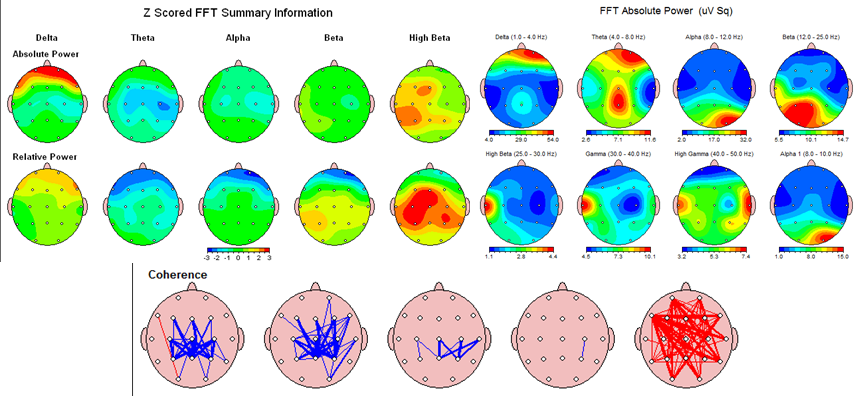
we all have our own beautiful brain maps, constantly changing. image courtesy of the Institute of Functional Neuroscience, http://www.ifn.net.au/what-is/
I just got back from a long weekend in New York—my first visit since moving back home to Minneapolis in December. I was lucky to be able to catch the creative and brilliant Shelly Menolascino MD and Mitch Belgin—also known as my employers at Washington Square Psychiatry and TMS until just a few months ago—at the end of a busy work week.
We ate chocolate and laughed and talked about neuroscience…ahhh, just like old times. I checked out the Power Point for a presentation they just made at the ANT Neuro conference in Burgundy, France. This was the culmination of research we did during the past year about the brain’s fear circuits, and how measuring brain activity may help in understanding the treatment of social anxiety. I remembered why I loved working for Shelly and Mitch so much: they are simply on the cutting edge of exploring how developments in brain science research can alleviate suffering and promote healing in people’s everyday lives.
When I started working at Washington Square Psychiatry in 2014, I dove headfirst into the ocean of measuring brain wave activity (using QEEG, placing electrodes on people’s heads and looking at each individual’s unique “brain map”) and interpreting it (through lots of reading and consulting with QEEG experts). We saw that depression is characteristically seen as diminished brainwave activity—especially depressed are the the slower alpha waves associated with calm and relaxation. We also saw that anxiety and rumination usually looks like excess activity of fast beta brain waves.
We all need beta waves to solve problems and think critically…but beta waves can wear us out and keep us up at night if we can't figure out how to quiet them during downtime. In fact, Dr. Les Fehmi argues that our culture itself is characterized by a state of being stuck in beta wave excess (his term for this is “narrow-focus attention”--for more see http://www.openfocus.com). Neuroscience offers its own interpretation of the busy, overscheduled rhythm of our lives: in this society, precious little value is placed on developing the slow frequencies the brain needs in order to rest and recharge. We end up hyper-focused, and seeking out activities that force the slow wave activity we crave…like a drink or four at the end of the day, Netflix marathons, video games, eyes glazed over scrolling Facebook.
On Friday, when I told Shelly that I’m using Ericksonian hypnosis to support people to make change and access creativity as part of my nurse coaching practice, her response was “wouldn’t you like to see what hypnosis looks like on a QEEG?” She’s always looking through the lens of neuroscience. The truth is, not only would I love to see the map of my brain or others while experiencing hypnosis, I’ve thought about it a lot…my mind is now accustomed to thinking in terms of brain waves. I knew I had it bad one night last year at a club watching Pedrito Martinez, considered one of the great living percussionists in the world, performing a stupefying drum solo, appearing about as “in the zone” as a human being can be. My very first thought was “Oh, if I could hook him up to a QEEG right now and check his gamma waves!” (Gamma waves are speculated to be associated with peak performance, state of flow, and spiritual highs.) The stories of the most mundane and most extraordinary moments of our existence just might be told through the infinitely complex reflection of our constantly changing brain activity.
Research suggests that hypnosis helps us amplify the slower frequency waves of our brain, particularly theta waves, which are associated with deep meditation, the twilight between sleep and wakefulness, daydreaming. Theta waves also reflect emotional self-soothing, physiological healing and restoration, memory, creativity, and the consolidation of learning. When we cultivate these brain waves, great things happen. The more we practice being in these frequencies, the more capacity we have to create regenerative states for ourselves—and the less we need to depend on outside help from martinis or marijuana, television or telephones, to get there and stay there. At least this is how the current state of neuroscience research might account for the infinitely mysterious workings of our mind in hypnotic trance, and the great possibilities for growth and change when we set out to dive deep through hypnosis.
And you, what are you doing for your theta waves these days?
Pedrito Martinez conga solo, New Orleans 2013:


Comments